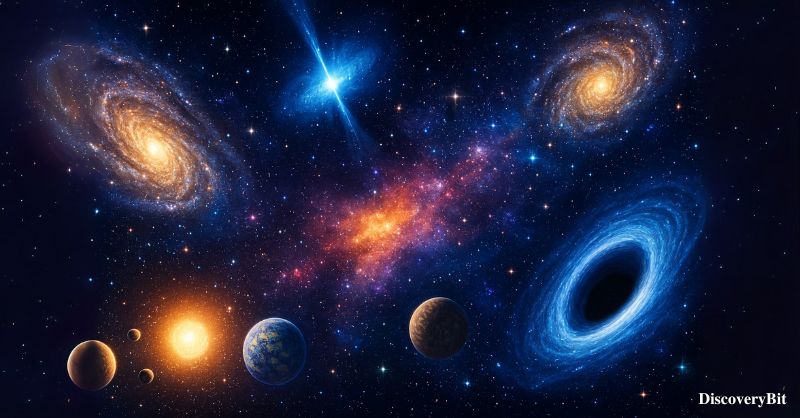
Fact 41: The Observable Universe Is 93 Billion Light-Years Wide
 Even though the universe is roughly 13.8 billion years old, the observable universe itself is about 93 billion light-years wide.
This is due to the expansion of space over time. It is one of the most fundamental facts about space and a potent reminder of how much there is beyond our reach.
Fact 42: The Moon Has No Magnetic Field
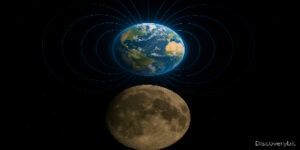 The Moon, unlike the Earth, does not currently have a global magnetic field. But the lunar rock samples returned by Apollo missions indicate that the Moon once had a magnetic field billions of years ago.
Scientists believe that a molten core, like Earth’s, generated that ancient magnetic field. The Moon’s magnetic field likely peaked around 4 billion years ago and faded as its core cooled and solidified. Some rocks still carry “fossil magnetism,” preserving a snapshot of that ancient field. Interestingly, newer research suggests that asteroid impacts may have briefly amplified weak magnetic fields, leaving behind localized magnetic signatures.
This is one of the more interesting facts about the Earth’s Moon and undoubtedly reflects on its early geologic activity.
Fact 43: Some Black Holes Can Power Galaxies
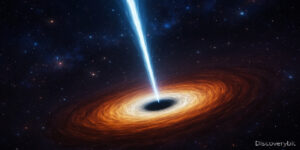 The enormous energy output from supermassive black holes at the center of the galaxies comes from their consumption of nearby matter.
When gas and dust tumble into the black hole, they don’t just disappear; they heat up and emit powerful jets of radiation, much of it in the form of X-rays.
These active super-bright galactic nuclei, or quasars, can outshine entire galaxies. This is one of the most amazing discoveries about space and a key insight into how galaxies evolve.
Fact 44: The Kuiper Belt Is Home to Thousands of Icy Worlds
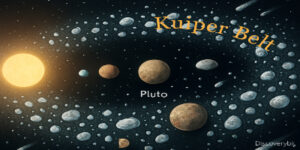 The Kuiper Belt, which lies past Neptune, is a huge region filled with icy bodies, dwarf planets, and comets.
Pluto is the most famous member of the belt, but astronomers have also discovered many other members, like Eris, Haumea, and Makemake.
This is one of the most important facts about space, and in particular, with regards to our solar system, because it extends our knowledge of the solar system’s outer edge.
Fact 45: The Sun Emits Solar Wind That Shapes the Solar System
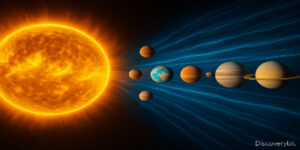 The Sun constantly releases a stream of charged particles known as the solar wind.
This wind creates the heliosphere, a protective bubble that extends far beyond Pluto and shields our solar system from interstellar radiation.
The Solar wind is also responsible for the beautiful auroras that we see on Earth. This is one of the most exciting facts about space and serves as a reminder of just how much influence the Sun exerts, beyond simply lighting and heating our world.
Fact 46: Some Exoplanets May Have Iron Rain
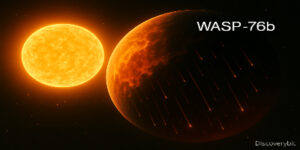 The atmosphere of the ultra-hot exoplanet WASP-76b contains vaporized iron, scientists say.
On the planet’s night side, where temperatures are cooler, this iron condenses and falls as rain.
This is one of the weirdest facts about space and a clear example of how completely different distant worlds’ weather systems can be from ours.
Fact 47: There Are Quasars Brighter Than Entire Galaxies
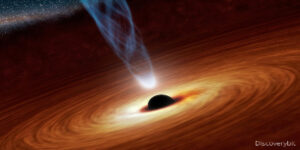 Quasars are incredibly luminous objects that are powered by supermassive black holes at the centers of distant galaxies.
Some quasars emit more energy than you would get from hundreds of galaxies combined.
These cosmic beacons can be seen from billions of light-years away and are among the very brightest and most energetic things you would find in the universe.
This is one of the most amazing facts about space and a testament to the extreme forces at play in deep space.
Fact 48: The Coldest Known Place in the Universe Is the Boomerang Nebula
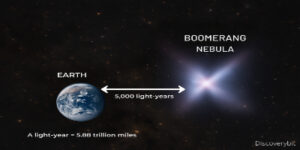 The Boomerang Nebula, located about 5,000 light-years from our planet, Earth, has a temperature of only one degree Kelvin above absolute zero.
This makes it the coldest well-known natural location in the universe, even more frigid than the background temperature of space itself.
This is one of the most unusual facts about space and a fascinating anomaly in the study of cosmic thermodynamics.
Fact 49: The Voyager Probes Have Left the Solar System
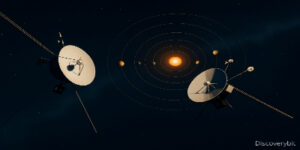 Voyager 1 and Voyager 2, launched in 1977, now lie in interstellar space. They are the most distant of all human-made objects from Earth, and they keep sending data back to NASA.
Each Voyager carries a Golden Record with sounds and images from Earth, meant as a message to any intelligent life that might encounter them.
This is one of the most exciting facts about space exploration and a testament to human curiosity.
Fact 50: The Sun’s Core Reaches 15 Million Degrees Celsius
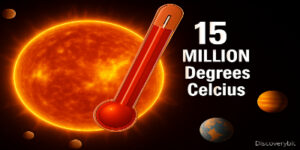 Nuclear fusion takes place at the center of the Sun, and it occurs at temperatures of about 15 million degrees Celsius.
This fusion process involves the combination of hydrogen nuclei to form helium with the release of vast amounts of energy that powers the Sun and sustains life on Earth.
This is one of the most important facts about space and a fundamental concept in astrophysics.
Fact 51: The Great Red Spot on Jupiter Is Shrinking
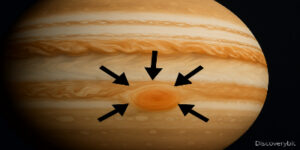 Jupiter’s Great Red Spot, a massive storm larger than Earth, has been observed for over 350 years.
Recent data now show that the storm is gradually shrinking in size, but scientists are still unsure as to why this is happening, and so the Great Red Spot remains one of the most iconic and mysterious features in the solar system.
This is one of the most interesting facts about Jupiter and planetary weather.
Fact 52: The Moon Causes Tides on Earth
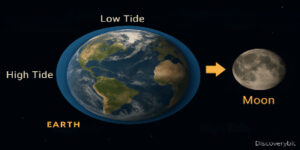 The gravitational pull of the Moon is the primary force behind Earth’s ocean tides.
As the Moon goes around Earth, its gravity exerts a pull on the oceans, creating bulges that result in high and low tides. This interaction also gradually slows Earth’s rotation.
This fact is one of the most important facts about the Earth’s Moon and a clear example of how celestial mechanics affect life on Earth.
Fact 53: There Are More Galaxies Than Previously Thought
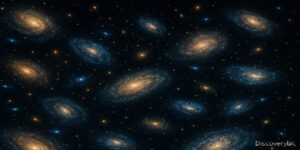 Relatively recent data from NASA’s Hubble Space Telescope indicates that the universe holds at least two trillion galaxies, 10 times more than previous estimates.
Of these unfathomable numbers, a large fraction of these galaxies are small and dim, which makes it difficult to detect them.
This is one of the most amazing facts about space and a reminder of the sheer number of galaxies and how much remains undiscovered in the cosmos.
Fact 54: The Universe Has No Center
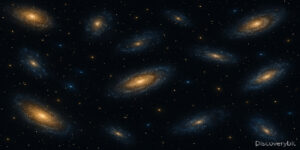 The universe does not have a center. Compared to a balloon that expands from a central point, the universe expands uniformly in all directions.
This means there is no central from which everything is moving outward. Every point in space is moving away from every other point.
This is one of the most unusual facts about space and a fundamental concept in cosmology.
Fact 55: The Moon Has a Dusty Atmosphere Called an Exosphere
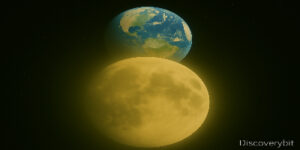 Even though the Moon does not have a dense atmosphere like Earth, it has a very thin blanket layer of gases known as an exosphere.
This layer is so sparse that its individual molecules scarcely collide with each other. The Moon’s thin atmosphere contains elements like helium, neon, and hydrogen.
This is one of the more curious and interesting facts about the Earth’s Moon and helps scientists unravel how atmospheres form and behave on the solar system’s many rocky bodies.
Fact 56: Some Stars End Their Lives in Gamma-Ray Bursts
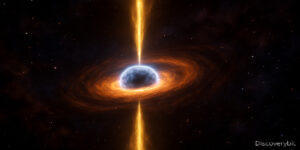 When massive stars collapse into black holes, they can emit powerful jets of energy known as gamma-ray bursts.
These bursts are the most energetic explosions in the universe, and they release more energy in a few seconds than the Sun will emit over its entire lifetime.
This is one of the most amazing facts about space and a key area of research in high-energy astrophysics.
Fact 57: There Are Clouds on Titan That Rain Methane
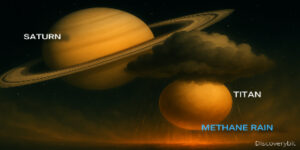 Titan, Saturn’s largest moon, possesses a thick atmosphere and weather systems of its own, including clouds, rain, and even lakes. But, unlike Earth, they are made of liquid methane and ethane instead of water.
This is one of the weirdest facts about space and makes Titan one of the most Earth-like, yet alien, places in the solar system.
Fact 58: The Universe May Be Flat
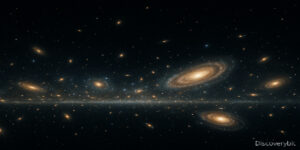 Measurements of the cosmic microwave background and large-scale structure (the vast arrangement of galaxies, clusters, and cosmic filaments that form the universe’s web-like pattern) indicate that the universe may be geometrically flat.
This means that parallel lines would never meet and that the rules of Euclidean geometry apply on cosmic scales.
This is one of the most unusual facts about space and has profound implications for the fate of the universe.
Fact 59: The Earth’s Magnetic Field Is Shifting
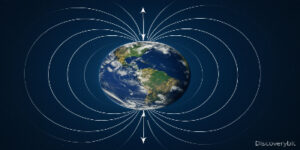 The Earth’s magnetic field is not static. It does gradually shifts over time, and at times in the past the magnetic poles have even flipped.
The last major reversal occurred about 780,000 years ago. Scientists monitor the field closely, because as a shield, it protects the planet from harmful solar and cosmic radiation.
This is one of the most important facts about space and Earth’s interaction with the solar environment.
Fact 60: The Moon’s Gravity Stabilizes Earth’s Tilt
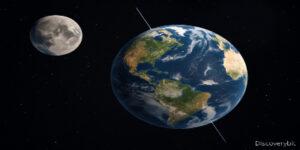 If the Earth has no Moon, the Earth’s axial tilt would vary considerably over time, causing an extreme shift in climate changes.
The Moon’s gravitational pull helps stabilize the Earth’s tilt at ~23.5 degrees, which is crucial for maintaining relatively stable seasons and climate.
This is one of the most fascinating facts about the Earth’s Moon and its role in supporting life on Earth.
Fact 61: There Are Lightning Storms on Jupiter
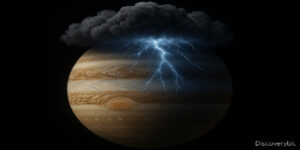 The lightning storms on planet Jupiter are massive and are far more powerful than those on Earth.
This is a fundamentally different kind of storm, fueled by the planet’s thick atmosphere and intense internal heat.
NASA’s Juno spacecraft has captured images and data showing lightning flashes in the planet’s polar regions. This is one of the most exciting facts about space and a vivid example of extreme planetary weather.
Fact 62: The Universe Is Mostly Made of Dark Matter and Dark Energy
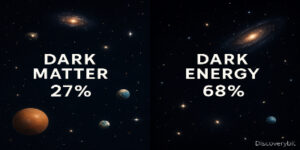 Ordinary matter, the stuff that makes up stars, planets, and people, accounts for only about 5 percent of the universe.
The rest is composed of dark matter (27 percent) and dark energy (68 percent), both of which remain largely mysterious.
This is one of the most important and mind-expanding facts about the universe.
Fact 63: Kepler-138 b Is One of the Lightest Confirmed Planets Ever Measured
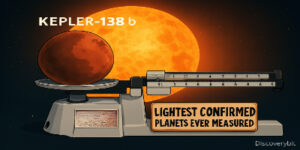 Kepler-138 b is a Mars-sized exoplanet orbiting an M-type red dwarf star that is about 219 light-years away in the constellation Lyra. It was the first exoplanet smaller than Earth to have both its mass and radius measured, marking a major milestone in planetary science.
With a mass of approximately 0.07 Earth masses (about 1.27 times the mass of Mercury), Kepler-138 b is not lighter than Earth’s Moon, which has a mass of 0.0123 Earths. However, it remains one of the lightest confirmed exoplanets with a measured density, and its composition is consistent with a rocky, terrestrial world.
While newer candidates like Proxima d and Gliese 581 e may be even lighter, they lack the same level of mass-radius precision. Kepler-138 b’s confirmed measurements make it a benchmark for studying sub-Earth-sized planets and the diversity of rocky worlds in the galaxy.
Fact 64: WASP-193b is a Planet that is as Light as Cotton Candy
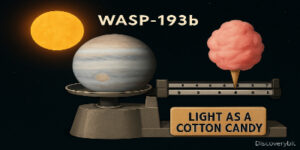 Astronomers have discovered an exoplanet, called WASP-193b, which is so low in density that it has been compared to cotton candy.
Despite being 50 percent larger than Jupiter, it has only about one-tenth of Jupiter’s mass, making it the second-lightest planet ever discovered.
WASP-193b density is so low, around 0.059 grams per cubic centimeter, that it challenges current models of planetary formation. The planet still bewilders scientists on how such a large, fluffy planet could have formed and retained its atmosphere.
This is one of the weirdest and most amazing facts about space, highlighting just how strange exoplanets can be
Fact 65: Venus Shows Signs of Geologic Life and Possible Biosignatures
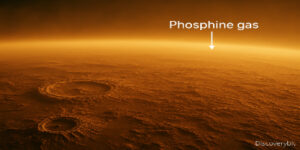 Venus, long considered a dead and hostile world, is showing surprising signs of activity. Relatively recent studies of surface features called coronae, vast circular formations, suggest that Venus may still be geologically active, with mantle plumes actively reshaping its crust.
Even more interesting, astronomers detected phosphine gas in the planet’s upper atmosphere. Phosphine is a potential biosignature, as on Earth, as it can be produced by microbial life in oxygen-free environments. While not a definitive proof of life, this detection has sparked interest in Venus as a candidate for aerial microbial ecosystems.
This is one of the most exciting and controversial facts about space, challenging our assumptions about where life might exist.
Fact 66: Neutron Stars Can Spin at 600 Times Per Second
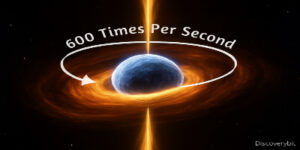 Neutron stars are the remnants of massive stars that have undergone supernova explosions, which are colossal stellar explosions that occur when a massive star runs out of fuel and collapses, and then releases an enormous burst of energy and light that often outshines entire galaxies for a brief time.
These incredibly dense objects can rotate at astonishing speeds, with some spinning up to 600 times per second. Known as pulsars, these stars emit beams of radiation that sweep across space like cosmic lighthouses.
This is one of the most exciting facts about space and demonstrates the extreme physics that govern the universe.
Conclusion
From diamond storms on Neptune to potential biosignatures on K2-18b, these space facts show just how strange and spectacular our universe truly is. As telescopes grow more powerful and missions venture farther, we will constantly continue to rewrite what we know about space and what we thought was impossible.
Whether you’re here to learn, to teach, or to simply marvel at the cosmos, we hope this collection leaves you inspired. And remember: every time you look up at the night sky, you’re not just seeing stars. You are looking into the past, into possibilities, and of course, the greatest mystery of all.
Tags: amazing facts about space amazing space facts best facts about space cool space facts exciting facts about space fun facts about space interesting facts about space interesting things about space space facts unusual facts about space weird facts about space