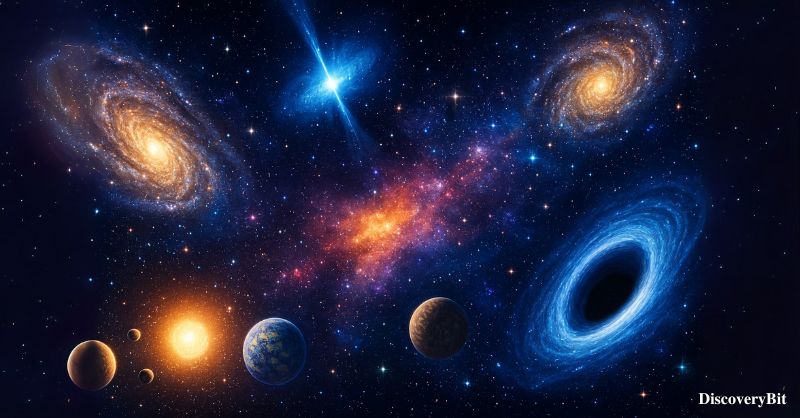
The universe is vast, full of intrigues, and packed with surprises. For example, it comprises interesting space facts of planets that rain diamonds to stars that spin faster than a blender; we can definitely say that space is filled with events that defy logic and make one wonder.
No matter your realm of expertise, whether you’re a science enthusiast, a trivia lover, or just someone who enjoys mind-blowing facts, this list of mind-blowing space facts is for you.
We’ve curated the most amazing, weird, and fascinating space facts in this post. Each one is backed by solid science and written to spark your curiosity. You’ll explore the extremes of our solar system, the most current exoplanet findings, and the latest discoveries from instruments like the James Webb Space Telescope.
Let’s begin with an intriguing space fact about our galaxy, the Milky Way.
PS: The images may not represent actual events, but they are designed to help readers visually grasp each fact.
Fact 1: There Are More Trees on Earth Than Stars in the Milky Way
 This fact may sound unbelievable, but it is true, as the Earth has an estimated 3 trillion trees, compared to the Milky Way, which contains about 100 to 400 billion stars.
This comparison between the trees and star counts is one of the weird facts about space that helps put the cosmic in scale and perspective, and reminds us of how much life is flourishing on Earth.
Fact 2: The Moon Is Gradually Moving Away from Earth
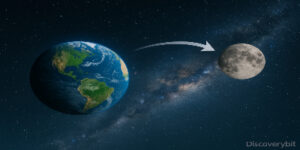 The Moon is very gradually drifting away from Earth at a rate of about 3.8 centimeters per year. Scientists confirmed this using laser reflectors that were placed on the lunar surface during the Apollo missions.
In over millions of years, this ongoing slow separation will change the nature of Earth’s tides and the speed at which our planet rotates. It is a subtle but powerful reminder that even celestial relationships are not static.
This is one of the more interesting facts about space that connects astronomy with Earth science, and a subtle reminder that even heavenly bodies aren’t immune to the forces of change
Fact 3: There Are More Stars in the Universe Than There Are Grains of Sand on Earth
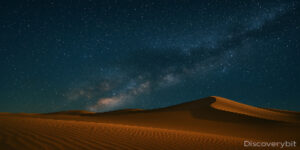 Estimates suggest that the observable universe contains over 100 billion galaxies, each with hundreds of billions of stars. That means there are likely more stars in the universe than grains of sand on all the beaches of Earth combined.
This staggering scale is one of the most mind-blowing facts about the universe and underscores the vastness of space that we are only beginning to explore.
Fact 4: Mars Hosts the Largest Organic Molecules Ever Found Beyond Earth
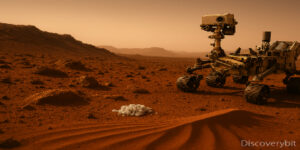 NASA’s Curiosity rover recently observed decane, undecane, and dodecane, long-chain hydrocarbons, in a rock sample from Gale Crater. To our best-known knowledge, these are the largest organic molecules ever found on Mars, and they bear a striking resemblance to fragments of fatty acids, which are all but essential for life on Earth.
However, these molecules can be formed through non-biological processes, but their presence suggests that prebiotic chemistry on Mars may have been more advanced than previously thought.
This is one of the most important facts about Mars, and it makes the push to bring back Mars rock samples to Earth for further analysis.
Fact 5: Farfarout Has the Longest-Known Orbit in the Solar System
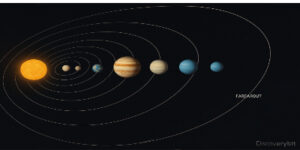 The dwarf planet candidate 2018 AG37, nicknamed Farfarout, currently holds the record for the longest-known orbit in the solar system. Discovered at a distance of 132 AU from the Sun, Farfarout follows a highly elliptical path that stretches from 27 AU to approximately 133 AU, with a semi-major axis of 80.2 AU and an orbital period of roughly 700 years.
Its orbit is so elongated and slow that it takes nearly a millennium to complete one revolution around the Sun. Farfarout was first imaged in 2018 during a search for Planet Nine and confirmed in 2021. Despite its extreme distance, it does not support the clustering patterns predicted by the Planet Nine hypothesis. Instead, its trajectory suggests past gravitational interactions with Neptune, classifying it as a scattered disc object.
This discovery dethroned earlier contenders like 2017 OF201 and 2018 VG18 (Farout), which were previously considered among the most distant and slowest-moving objects in the solar system.
Fact 6: There Are More Molecules in a Glass of Water Than There Are Stars in the Universe
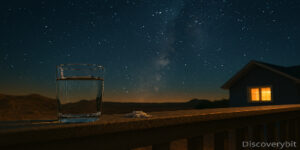 A single glass of water contains close to 8 × 10²⁴ molecules. That’s more, by a significant margin, than even the loftiest estimates for the number of stars in the observable universe, which sit at about 1 × 10²².
This side-by-side comparison is one of the most astonishing and brain-bending facts about space and matter. It wonderfully hints at the incredible scale difference between the microscopic and the cosmic.
Fact 7: There Is a Massive Cloud of Alcohol in the Milky Way
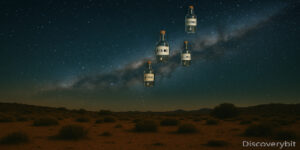 A giant cloud of ethyl alcohol has been discovered in the Sagittarius B2 region, which is near the center of our galaxy.
This cloud has enough ethyl alcohol (the same kind of alcohol we drink) to make 400 trillion trillion pints of beer.
Despite its chemical similarity to beer, it is not suitable for human consumption due to the presence of toxic friends, I mean gases like hydrogen sulfide, carbon monoxide, and methanol, making it highly harmful to beer drinking folks.
The presence of ethyl alcohol and other complex organic molecules, such as ethyl formate, which smells like rum and tastes like raspberries, reveals the rich chemistry and unusual facts about space, and is a compelling example that hints at how life’s building blocks may form in star-forming regions.
Sagittarius B2 is one of the most molecule-rich zones in the Milky Way, and nearly half of all known interstellar molecules were first detected there.
Fact 8: The International Space Station Orbits The Earth Every 90 Minutes
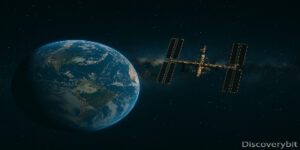 Traveling at a speed of roughly 28,000 kilometers per hour, the International Space Station (ISS) makes an orbit around Earth approximately every 90 minutes.
This translates to 16 sunrises and sunsets each day for all the astronauts aboard the ISS, who must nevertheless manage their time all the same.
This is one of the most exciting facts about space and a bewildering indication of how fast we are moving through the cosmos, even when we feel stationary. It also points to the operating conditions that spaceflight crews must cope with in the name of science
Fact 9: The Earth Is Hit by 100 Tons of Space Dust Every Day
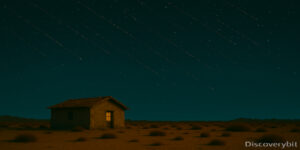 Our planet consistently takes a barrage from tiny particles in space, called micrometeoroids.
On average, Earth adds about 100 tons of that cosmic dust daily to its total weight. However, most of it burns up in the atmosphere, of course, but some of it does make it to the surface.
This is one of the more surprising and fun facts about space that connects the cosmos to our everyday environment.
Fact 10: A Planet Composed Entirely of Diamonds Exists
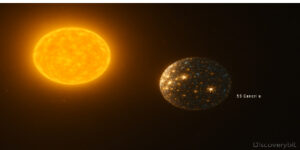 Astronomers have identified a planet called 55 Cancri e that they believe is made, in large part, of carbon in the form of diamond. This exoplanet, located about 40 light-years from Earth, is so close to its parent star that its surface temperature exceeds 2,000 degrees Celsius.
The intense heat and the pressure believed to exist inside 55 Cancri e likely transformed its carbon-rich interior into crystalline diamond. This is one of the most amazing space facts and a striking example of how alien and extreme other worlds can be.
Fact 11: The Sun Will Shine for Another 5 Billion Years
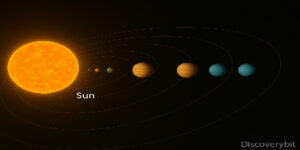 Currently in its middle age, the Sun is about 4.6 billion years old and has enough hydrogen fuel to continue nuclear fusion for another 5 billion years.
After that, it will expand into a red giant before collapsing into a white dwarf. This is one of the most important facts about space and helps scientists understand stellar lifecycles.
Fact 12: The Largest Volcano in the Solar System Is on Mars
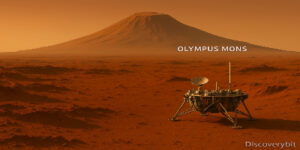 Olympus Mons on Mars is the tallest volcano in the solar system, standing at about 22 kilometers high. Its base is roughly the size of the state of Arizona.
Despite its massive size, the volcano has a gentle slope due to Mars’s lower gravity. This is one of the most fascinating facts about planet Mars and a key feature of Martian geology.
Fact 13: A Day on Venus Lasts Longer Than Its Year
 Venus, a planet in our solar system, rotates so slowly that one full day on the planet takes 243 Earth days. In contrast, it completes an orbit around the Sun in just 225 Earth days. This means that a single day on Venus is longer than its entire year.
Even more unusual, Venus spins in the opposite direction of most planets, a phenomenon known as retrograde rotation. This is one of the weird facts about space that highlights the diversity of planetary behavior in our solar system.
Fact 14: The Sun Makes Up 99.8 Percent of the Solar System’s Mass
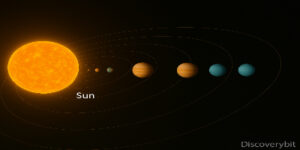 By far the most massive object in our solar system is the sun, which accounts for approximately 99.8 percent of the solar system’s total mass.
Gravitationally speaking, the sun governs the orbits of all planets, asteroids, and comets around it. And without the Sun’s immense mass and energy output, life on Earth would not be possible.
This is one of the most crucial facts about space and a starting point in understanding how solar systems function.
Fact 15: The Solar System Takes 225 Million Years to Orbit the Milky Way
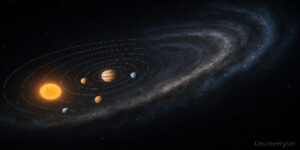 Our solar system is not at rest. It orbits around the center of the Milky Way galaxy at an average speed of 828,000 kilometers per hour.
One full orbit, known as a galactic year, takes about 225 million Earth years. This is among the most fundamental facts about space and offers a perspective on the vast timescales involved in cosmic motion.
Fact 16: The Night Sky Is a Time Machine
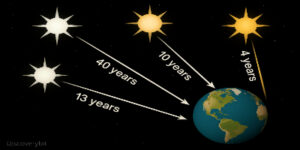 When you gaze at the stars, you see them as they were in the eons past. This is because light takes its sweet time traveling; even the nearest star, Proxima Centauri, does not reach us until it is over four years old.
Some of the stars visible to our naked eye may have already punched out for good. This is one of the most poetic and scientifically profound facts about space.
Fact 17: Earth Is the Sole Planet Not Named After a Deity
 All the planets in our solar system, except Earth, are named after Roman or Greek deities. Meanwhile, Earth, whose name comes from Old English and Germanic words meaning “ground” or “soil,” stands as the sole such body in our solar system with a non-deity name.
This linguistic anomaly makes Earth unique not only in its ability to support life but also in its cultural history. This fact is one of the more interesting things about space that makes for an even cozier connect-the-dot situation between human language and the otherwise cold, hard, lifeless realm of outer space.
Fact 18: A Spoonful of a Neutron Star Weighs as Much as a Mountain
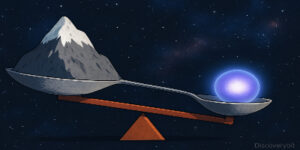 Neutron stars are so dense that a single teaspoon of their material would weigh around six billion tons on Earth.
This density results from the collapse of a massive star’s core, where protons and electrons are crushed into neutrons.
This is one of the most extreme and exciting facts about space, illustrating the incredible forces at play in stellar evolution.
Fact 19: There are Rain Showers of Diamonds on Neptune and Uranus
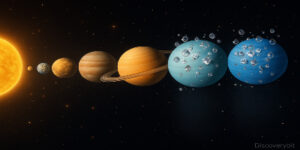 Deep within the atmospheres of Uranus and Neptune, extreme pressure and temperature conditions can compress carbon atoms into diamonds. These diamonds then fall like rain through the planets’ icy layers.
Laboratory experiments have replicated these conditions, confirming that diamond rain is not just theoretical, but it’s likely happening right now on these distant ice giants. This is one of the most unusual and visually stunning facts about space, and it adds a whole new meaning to the phrase “precious weather.”
Fact 20: Water Ice Exists in Permanent Shadow on the Moon’s Craters
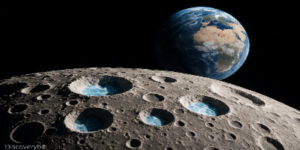 NASA’s Lunar Reconnaissance Orbiter, along with India’s Chandrayaan-1 mission, has confirmed that there is ice water in the crater shadows at the Moon’s poles.
These areas do not get sunlight of any kind and stay very cold, preserving ice for billions of years. This discovery could play a crucial role in any lunar adventure or colonization that we might try in the future.
Fact number 20 is possibly one of the most important facts about the Moon in its relatively recent history.
Tags: amazing facts about space amazing space facts best facts about space cool space facts exciting facts about space fun facts about space interesting facts about space interesting things about space space facts unusual facts about space weird facts about space