Fact 21: A Gigantic Cold Spot Exists in the Universe
 The Cosmic Microwave Background, the afterglow of the Big Bang, shows us a huge cold region in space, which we call the Cold Spot.
This region spans over 1.8 billion light-years and is way cooler than any area around it. Some scientists think that this could be covering up evidence of a supervoid, while others wonder if it might be hinting at interactions with another universe.
Either way, this cold spot is one of the strangest things we have got going on in the universe and has cosmologists scratching their heads.
Fact 22: There Is a Planet Where It Rains Glass
 The exoplanet, HD 189733b, which is located about 64 light-years from Earth, is famous for its wild and extreme weather.
This planet experiences winds that reach speeds of over 5,400 miles per hour, and also because of the planet’s searing heat and astonishing atmospheric conditions, it rains down droplets of molten glass (actually molten silicates) that skim the surface of the planet sideways.
This is one of the weirdest facts about space and, and worst case, hard to imagine how any molecule of water could survive the trip from the clouds to the ground in such a monstrous atmosphere.
Fact 23: The Milky Way and Andromeda May Not Collide Anytime Soon
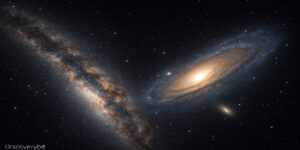 For a long time, it has been thought that the Milky Way and Andromeda galaxies were on a collision course with each other. But new simulations of the two galactic behemoths suggest that the likelihood of a direct merger in the next 5 billion years is only about 2 percent.
Despite them moving toward each other at roughly 62 miles per second, the galaxies may instead sail past each other in a series of close but safe gravitational passes. If they were to merge, it would take 8 to 10 billion years to get the job done.
The differences in predictions took into account additional variables, such as the gravitational influence of the Large Magellanic Cloud. And by the way, by the time any merger occurs, Earth may no longer exist, having likely been consumed by the Sun during its red giant phase. This is one of the most important facts about space, as it reshapes our understanding of galactic evolution.
Fact 24: The Largest Known Star Could Fit Billions of Suns
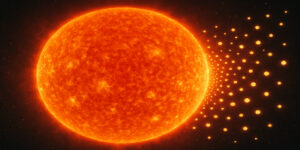 For years, UY Scuti held the title of the largest known star, with early estimates placing its radius at 1,708 times that of the Sun. At that size, it could contain over 5 billion Suns and its photosphere would extend beyond the orbit of Jupiter if placed at the center of our solar system.
However, more recent measurements using Gaia DR3 data revised its radius to about 909 solar radii, still enormous but no longer record-breaking.
The current title holder is Stephenson 2-18, a red supergiant located roughly 18,900 light-years away in the constellation Scutum. Its estimated radius is a staggering 2,150 times that of the Sun, making it the largest star known to date. If placed in our solar system, its outer layers would engulf Saturn’s orbit. Despite uncertainties in its distance and cluster membership, Stephenson 2-18 remains the most extreme example of stellar size ever recorded.
This fact showcases how astronomical measurements evolve with better data and why the cosmos continues to surprise us.
Fact 25: Earth’s Atmosphere Extends Beyond the Moon
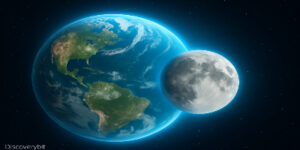 Relatively new investigations relying on the SOHO spacecraft have shown that the Earth’s outermost atmospheric layer, the geocorona, stretches up to 630,000 kilometers into space.
That means that the Moon’s orbit is well within the Earth’s extended atmosphere. This is one of the most unexpectedly unusual facts about space, pushing the boundaries of our age-old concept of where the Earth ends and space begins.
Fact 26: There Are Rogue Planets Drifting Through Space
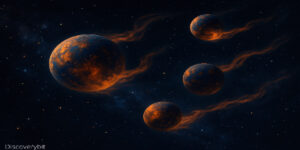 Not all planets revolve around stars. Some, called rogue planets, float freely through space, not bound to any solar system.
Scientists guess that there could be billions of these free-floating/wayward worlds in our galaxy alone. This is yet another weird fact about space that also raises fascinating questions about planetary formation and the potential for life in unexpected places.
And what is life in a solar system without a sun to warm the planets and their not-so-ordinary inhabitants?
Fact 27: Saturn’s Density Is So Low It Could Float in Water
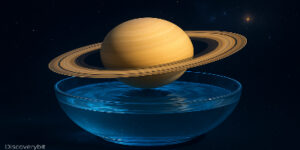 Saturn has the lowest density of any planet in our solar system. As its average density is less than that of water, it would imply that if you could place it in a giant cosmic bathtub, it would float.
This is one of the fun facts about space that also highlights the unique composition of gas giants.
Fact 28: The Universe Is Expanding Faster Than Expected
 Observations from the Hubble Space Telescope and other instruments show that the universe is expanding at an accelerating rate.
This discovery led to the concept of dark energy, a mysterious force that makes up about 68 percent of the universe.
This finding constitutes one of the most important facts about space and a central mystery in modern cosmology.
Fact 29: The James Webb Space Telescope Can See Back in Time
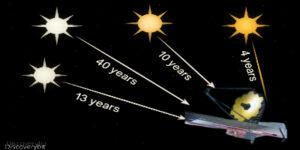 The earliest galaxies formed after the Big Bang and emit infrared light that the James Webb Space Telescope (JWST) is built to detect.
And because light takes its sweet time to travel, JWST is essentially looking billions of years into the past. The telescope has already captured images of galaxies that existed over 13 billion years ago, capturing not just the present but also the distant past.
The feats of the JWST have made it the most exciting new arrival since the Hubble Space Telescope.
This is one of the most exciting facts about space and a powerful example of how astronomy allows us to study the universe’s history in real time.
Fact 30: The Earth’s Rotation Is Gradually Slowing Down
 The Earth’s rotation, because of the tidal friction caused by the Moon, is slowing down at a rate of about 1.7 milliseconds per century.
This implies that millions of years ago, a day on Earth was significantly shorter. Compare that with the dinosaur era: Scientists estimate that a day during the time of the reign of the dinosaurs lasted about 23 hours, give or take some milliseconds.
This is one of the more interesting facts about space and Earth’s dynamic relationship with its only natural satellite.
Fact 31: Space Is Not Completely Silent
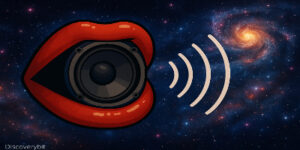 Although we often think of space as a silent vacuum, it is actually far from being devoid of sound-related phenomena. Traditional sound waves, as we know them, need a medium like air or water to propagate, and since space is mostly a vacuum, you wouldn’t hear anything out there with just your ears. Even if you were to scream in deep space, no one would hear it, not even you.
But don’t let that make you think that the vacuum of space is some kind of dead zone for sound, as space is filled with plasma, a superheated, ionized gas that can carry pressure waves and oscillations. It is actually filled with the potential for the kind of sound that we just can’t hear without the help of some pretty sophisticated instruments.
Scientists have used specialized instruments to detect these plasma waves and convert their frequencies into audible sound. For example, NASA has recorded eerie “songs” from planets like Jupiter and Saturn, and even the growl of a black hole in the Perseus galaxy cluster by translating pressure ripples in surrounding gas into sound waves.
So while space is silent in the conventional sense, it’s alive with vibrations, electromagnetic emissions, and plasma turbulence that can be transformed into haunting audio. This makes it one of the most fascinating and misunderstood facts about the cosmos.
Fact 32: The Hubble Space Telescope Has Traveled Over 4 Billion Miles
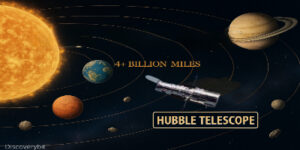 Launched in 1990, the Hubble Space Telescope has orbited Earth more than 180,000 times, traveling over 4 billion miles.
It has taken many of the most famous pictures in astronomy, such as the Pillars of Creation (a cosmic nursery where stars are being born. It’s like watching the universe build new suns from scratch) and the Hubble Deep Field (a snapshot of thousands of distant galaxies packed into a tiny sliver of sky, revealing just how vast and full the universe is, even in areas that look empty to the naked eye).
This is one of the most important facts about space exploration and the not-so-distant reminder that human technology reaches quite nicely into the cosmic arena.
Fact 33: The Moon Has Moonquakes
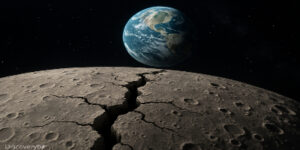 Much like the Earth, which has earthquakes, the Moon has its own version called moonquakes.
These seismic events are caused by tidal forces from Earth’s gravity, meteorite impacts, and the Moon’s own sunlit side heating up while the shaded side remains cold.
Some moonquakes can be quite strong, lasting up to 10 minutes. This is one of the most interesting facts about space and highlights the Moon’s ongoing geological activity, despite its seemingly lifeless surface.
Fact 34: Some Stars Are Older Than the Universe
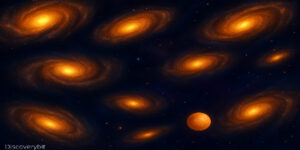 This may seem impossible at first glance. However, we see some stars, like HD 140283 (nicknamed the Methuselah star), that seem to be older than the estimated age of the universe.
This discrepancy is likely due to uncertainties in our measurement, but it has sparked some debates in cosmology. This is one of the weirdest facts about space and a reminder that even our best models of the universe are still evolving.
Fact 35: The Largest Known Structure in the Universe Is the Quipu Superstructure
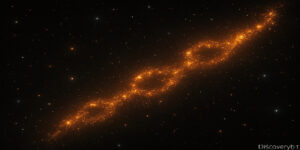 As of 2025, a superstructure, called Quipu, has been identified to lay claim to the title of the largest known structure in the universe.
Quipu, a cosmic filament, spans an astonishing 1.3 billion light-years and contains over 200 quadrillion solar masses. If that wasn’t enough, it consists of 68 galaxy clusters arranged along a massive filament with smaller side branches, resembling the knotted cords of the ancient Incan counting system for which it was named.
The superstructure’s size and mass are sufficient to distort the very fabric of space and time, or the cosmic microwave background. Its sheer size and mass mean that it has influence over nearby galaxy clusters, by altering the cosmic landscape they move through
Quipu was discovered using X-ray data from the CLASSIX Cluster Survey, which mapped the densest regions of matter in the nearby universe.
While earlier contenders like the Huge-LQG and the Hercules–Corona Borealis Great Wall were once considered the largest structures, Quipu is the most thoroughly confirmed and observationally mapped superstructure to date. It anchors nearly half of the nearby galaxy clusters and challenges our understanding of cosmic homogeneity.
Fact 36: The Sun Will Eventually Become a White Dwarf
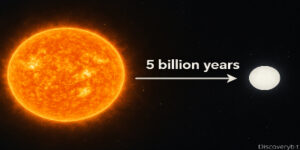 In roughly 5 billion years, the sun will have spent its nuclear fuel and expanded into a red giant, engulfing Mercury, Venus, and possibly Earth.
After shedding its outer layers, the sun will collapse into a white dwarf—a dense, Earth-sized remnant that will slowly cool over billions of years.
This is one of the most important facts about space and a key chapter in the life cycle of stars.
Fact 37: A Planet Has Been Found That Orbits Its Star in Just 18 Hours
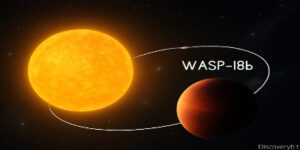 The exoplanet WASP-18b completes a full orbit around its star in under a period of 18 hours. The planet is classified as a “hot Jupiter” because of its enormous size and very close distance to the host star.
The planet’s temperatures reach over 2,000 degrees Celsius. This is one of the most electrifying facts about space and an eye opening instance of how varied planetary systems can be.
Fact 38: K2-18b Shows the Strongest Signs of Life Outside Our Solar System
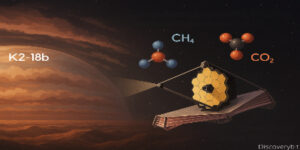 In late 2023, the James Webb Space Telescope (JWST) detected carbon-bearing molecules, including methane and carbon dioxide, in the atmosphere of K2-18b, a sub-Neptune exoplanet located 124 light-years away in the constellation Leo.
JWST data, more notably, revealed a tentative signal of dimethyl sulfide (DMS) and possibly dimethyl disulfide (DMDS), organic molecules that, on Earth, are primarily produced by marine phytoplankton, though abiotic sources are known to exist in rare environments.
K2-18b is considered a Hycean world, with a hydrogen-rich atmosphere and potential global ocean, placing it within the habitable zone of its star. The presence of DMS and DMDS at concentrations thousands of times higher than Earth’s atmospheric levels sparked excitement, but researchers emphasize that these detections are not definitive biosignatures. The signal reached 3σ statistical significance, which is promising but below the 5σ threshold typically required for scientific confirmation.
Follow-up observations and independent analyses are underway to establish the findings as facts, to eliminate non-biological explanations, and to improve atmospheric models. While this is one of the most promising leads in the search for life beyond earth, scientists are not breaking out the bubbly just yet. They stress that more data is needed to make any declaration with confidence.
Fact 39: The Moon Has No Atmosphere to Scatter Light
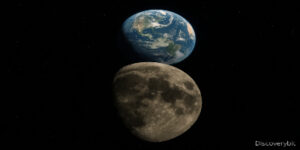 Due to the Moon’s lack of significant atmosphere, there is no air to scatter sunlight. Hence, the shadows on the Moon are pitch black, and the sky appears completely dark even during the lunar day.
This is one of the more interesting facts about the Earth’s Moon and explains why lunar photos show such sharp contrasts, as lunar images often look dramatic because of this extreme lighting. Bright surfaces are intensely lit, while shaded areas drop off into deep black. It’s not a camera trick, but physics.
Fact 40: Some Galaxies Are Moving Away Faster Than the Speed of Light
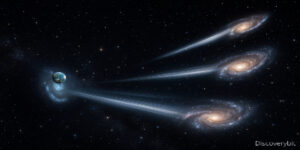 Some galaxies are moving away from us at speeds faster than light. This happens because the very fabric of space is stretching between us and the galaxies.
This does not violate the laws of physics because it is space that is expanding, and not the galaxies moving through space. This is one of the most unusual facts about space and a key concept in understanding cosmic inflation.
Tags: amazing facts about space amazing space facts best facts about space cool space facts exciting facts about space fun facts about space interesting facts about space interesting things about space space facts unusual facts about space weird facts about space