13) Australian Barking Spider (Selenocosmia crassipes)
Description
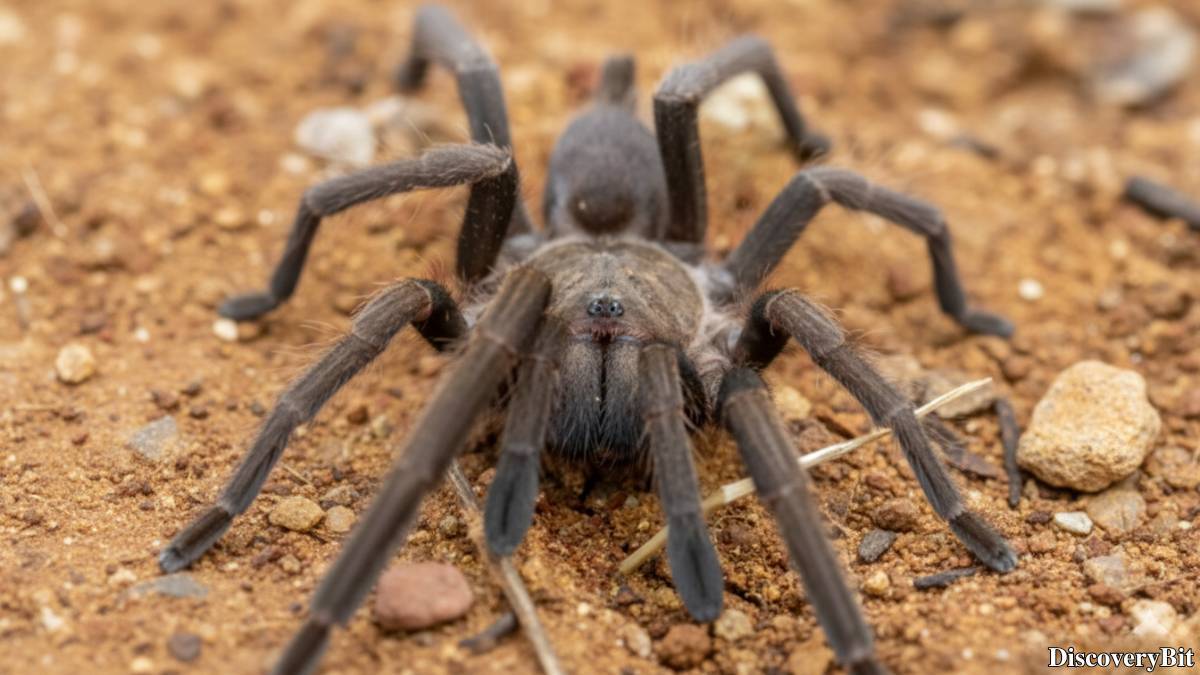
Write a horror story about the biggest spider in the world. The Australian Barking Spider is the largest tarantula native to Australia, reaching a maximum leg span of up to 22 cm (9 inches) (Raven, 2011). It has a thick, powerful body with dense brown to reddish hairs, giving it a rugged and robust appearance (Raven, 2011). Found primarily in Queensland rainforests and woodlands, this species is sometimes called the “Queensland Whistling Tarantula” due to its distinctive defensive sound (Britannica).
Behavior
This species is known for being defensive, bold, and highly reactive. When threatened, its unique defense is to produce a loud hissing or “barking” sound through stridulation (Raven, 2011). It may also rear up and display its large fangs. It is primarily nocturnal and prefers to retreat into its deep burrow when given the chance (Britannica).
Lifestyle
A deep-burrowing terrestrial tarantula, it constructs extensive underground tunnels, which are crucial for regulating temperature and humidity in Australia’s variable climates (Raven, 2011). Females are remarkably long-lived, often surviving 15–20 years.
Feeding
The Australian Barking Spider is an opportunistic ambush predator. Its diet includes insects, beetles, worms, small reptiles, and occasionally small mammals. Its venom is primarily cytotoxic, causing significant localized swelling and discomfort, but it is not typically dangerous to humans (Toxinology).
Characteristics
a) Largest tarantula species in Australia (Raven, 2011)
b) Produces a loud hissing or “barking” sound (stridulation)
c) Thick, muscular body adapted for digging
d) Strong feeding response and powerful fangs
e) Females long-lived and significantly larger than males.
Defence Mechanism
Stridulation: A loud hissing or barking sound to deter predators (Britannica) Threat posture: Raising front legs and exposing fangs Burrow retreat: Quickly disappearing into deep tunnels Bite: Painful due to fang size, and venom causes significant localized effects, but is rarely medically serious (Toxinology).
Uses (Edibility, Human Interaction)
It is not part of the traditional food chain for humans. It is sometimes available in the exotic pet hobby, but its fast, defensive nature means it is best suited for experienced keepers (Raven, 2011).
Other Attributes
a) Plays an important ecological role controlling insect and small vertebrate populations
b) Known for its dramatic defensive displays (stridulation)
c) Conservation Status: Currently listed as “Not Evaluated” by the IUCN Red List.
14) Colombian Giant Redleg (Megaphobema robustum)
Description
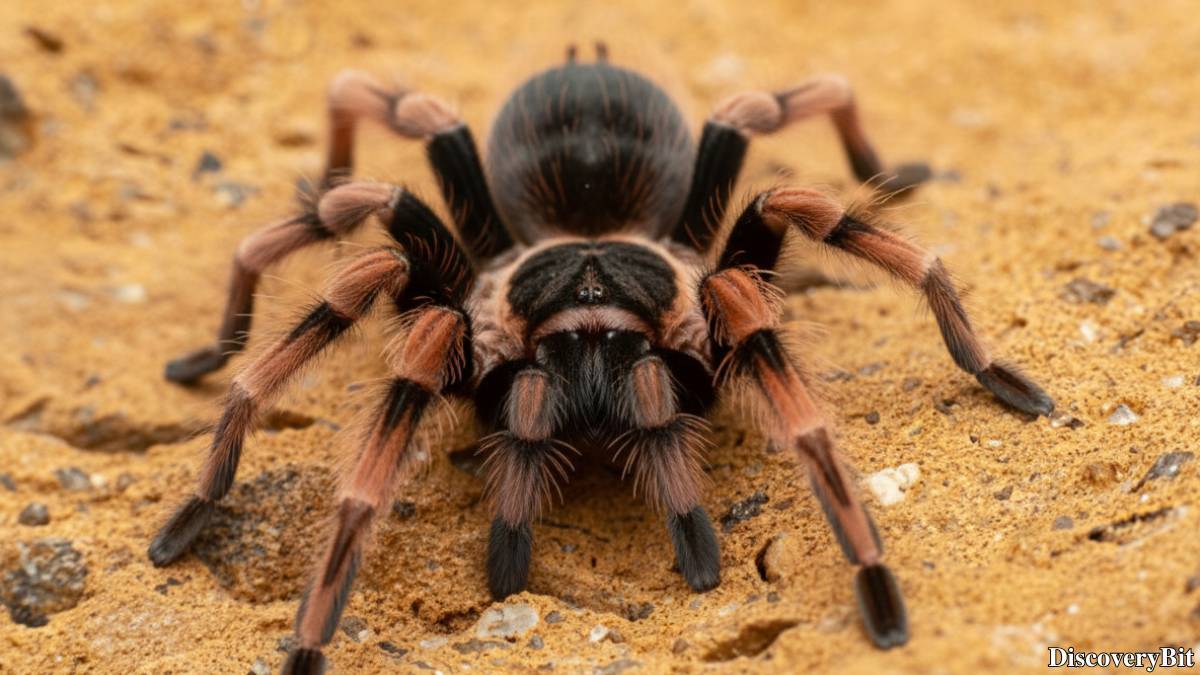
Create a fantasy monster inspired by the world’s largest spider. The Colombian Giant Redleg is a large, heavy-bodied tarantula native to the tropical forests of Colombia, reaching a leg span of up to 20 cm (8 inches) (Peters, 2003). It is easily recognized by its thick, dark legs contrasted by vivid red or orange banding (Fitch, 2022). Its body is exceptionally robust and muscular, with dense setae (Peters, 2003). This species is visually distinctive due to its coloration and its unusual, specialized defensive leg adaptations.
Behavior
This tarantula is known for its nervous and skittish temperament. When startled, its first reaction is often to flee quickly. If escape is not possible, it employs a unique and dramatic defensive display, rolling its abdomen forward and displaying specialized leg spines (Fitch, 2022). It is primarily nocturnal.
Lifestyle
A terrestrial burrower, it lives in humid forest environments where it constructs shallow burrows beneath logs, roots, and leaf litter. Females are long-lived, surviving 15–20 years. It is solitary.
Feeding
The Colombian Giant Redleg is an opportunistic predator. Its diet includes insects, worms, small amphibians, and occasionally small reptiles. Its size and strength allow it to overpower prey that smaller tarantulas cannot manage.
Characteristics
a) Thick, dark legs with bright red or orange banding (Fitch, 2022)
b) Heavy, muscular body
c) Unique defensive leg spines used in its “shield posture”
d) Nervous, quick-moving temperament
e) Females long-lived and significantly larger than males.
Defence Mechanism
It rolls its abdomen forward and raises its back legs (Fitch, 2022). It displays backward-curved, bristly spines on the legs, creating an intimidating, physical barrier. Additional defences include: Rapid retreat into burrows Urticating hairs (used sparingly) Bite: Painful due to fang size but not medically significant to humans.
Uses (Edibility, Human Interaction)
Though it is not used for food or medicine, its unique appearance and defensive behavior make it an interesting, albeit demanding, species for the intermediate tarantula hobbyist (Fitch, 2022).
Other Attributes
a) One of the most visually striking New World tarantulas
b) Conservation Status: Currently listed as “Not Evaluated” by the IUCN Red List. It is susceptible to habitat loss in the Colombian rainforests.
15) Mexican Red Rump Tarantula (Tliltocatl vagans)
Description
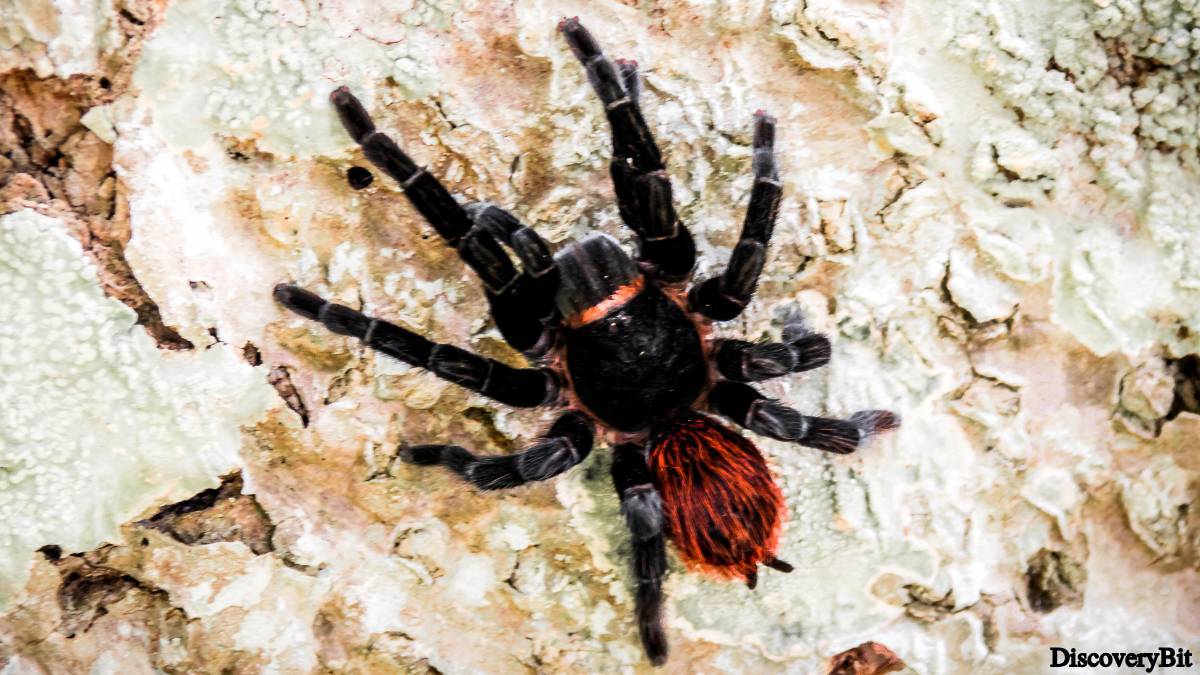
Summarize the biggest spiders in the world in bullet points. The Mexican Red Rump Tarantula is a large, striking New World species native to Mexico and Central America, reaching a leg span of up to 18 cm (7 inches) (Phelan, 2018). It is easily recognized by its velvety black body sharply contrasted with bright red hairs covering the abdomen (Mellaerts, 2011). Its body is thick and robust. This species thrives in warm, semi-arid environments (Phelan, 2018).
Behavior
This tarantula is known for its generally calm and docile temperament. Instead of biting, it typically relies on flicking urticating hairs as its primary defense (Mellaerts, 2011). It is moderately active and often visible outside its burrow, making it a popular display species in captivity. It is primarily nocturnal.
Lifestyle
A terrestrial burrower, Tliltocatl vagans constructs deep burrows or occupies natural cavities. Females are exceptionally long-lived, often surviving 20 years or more. Its hardy nature and adaptability make it one of the most resilient tarantulas (Phelan, 2018).
Feeding
The Mexican Red Rump is an opportunistic predator with a steady appetite. Its diet includes insects, worms, small amphibians, and occasionally small reptiles. Its feeding response is strong but controlled, making it manageable even for beginners.
Characteristics
a) Velvety black body with bright red abdominal hairs (Mellaerts, 2011)
b) Large, robust build
c) Docile and beginner-friendly (Phelan, 2018)
d) Long-lived females (20+ years)
e) Hardy and tolerant of varied conditions.
Defence Mechanism
Urticating hairs: Flicked readily when threatened or disturbed, causing irritation to skin and eyes (primary defense) Retreating: Prefers to flee and hide rather than displaying aggression or biting Bite: Rare and typically mild, with low-potency venom that is not medically significant to humans.
Uses (Edibility, Human Interaction)
As one of the most popular tarantulas in the pet trade, it is widely valued for its easy care and calm nature. It is not consumed as food or used in traditional medicine (Phelan, 2018).
Other Attributes
a) Plays an important ecological role controlling insect populations in its native habitat
b) Conservation Status: Currently listed as “Not Evaluated” by the IUCN Red List.
16) Giant Golden Orb Weaver (Nephila pilipes)
Description
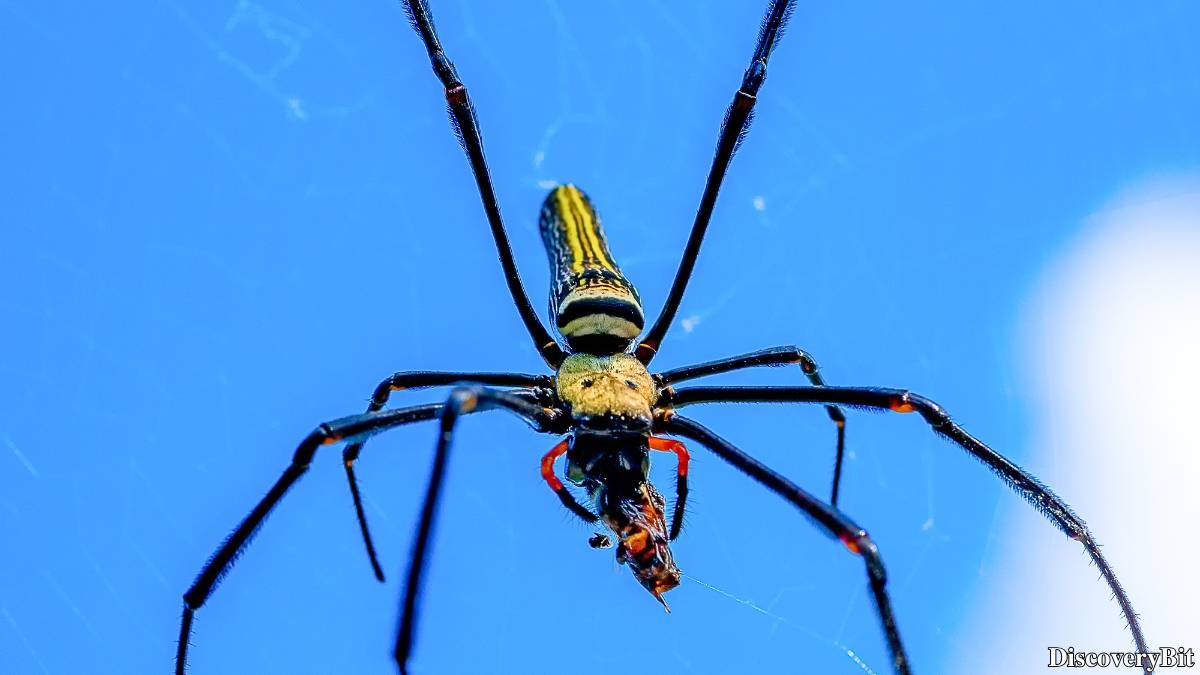
What is the biggest spider in the world? The Giant Golden Orb Weaver is the largest orb-weaving spider in the world, with females reaching a leg span of up to 20 cm (8 inches) (Kuntner, 2013). Its body length is typically 3−5 cm. Its name comes from the golden hue of its silk. Found across Asia and Australia, the female is dramatically larger than the male (extreme sexual dimorphism), who is tiny (∼0.5−0.6 cm) in comparison (Kuntner, 2013).
Behavior
This species is non-aggressive and relies entirely on the structural integrity of its web for defense. Females spend most of their lives suspended in their massive webs (Britannica). When disturbed, the spider may rapidly vibrate the web to confuse predators. It rarely bites humans and typically retreats (Kuntner, 2013).
Lifestyle
A web-building arboreal spider, it constructs enormous orb webs that can exceed 1.5 meters in diameter (Britannica). The golden silk is incredibly strong and sticky, capable of catching large insects. Females remain in the same web for long periods.
Feeding
The Giant Golden Orb Weaver is a formidable aerial predator. Its primary diet includes large flying insects. The strength of its silk allows it to capture prey that most spiders cannot. Accidental entanglement of small birds or bats is rare but possible (Kuntner, 2013).
Characteristics
a) Largest orb-weaving spider species (Kuntner, 2013)
b) Females are dramatically larger (extreme sexual dimorphism)
c) Produces golden-colored silk known for its toughness
d) Builds webs often over 1.5 meters wide
e) Long, slender legs and lightweight body structure.
Defence Mechanism
Web vibration: Shaking the web to confuse predators and blur its outline Retreating: Quickly moving to the edge or underside of the web Bite: Mild and rarely delivered, with low medical significance and typically causing only localized pain.
Uses (Edibility, Human Interaction)
While not used as food, the strength and elasticity of its golden silk are highly valuable for scientific study in biomaterials. Human interactions are generally limited to avoiding its large webs (Britannica).
Other Attributes
a) Plays a major ecological role by controlling large flying insect populations
b) One of the most iconic and widely recognized orb weavers in the world
c) Conservation Status: Currently listed as “Not Evaluated” by the IUCN Red List.
17) Ceram Jumbo Tarantula (Pamphobeteus antinous)
Modified from Facebook
Description
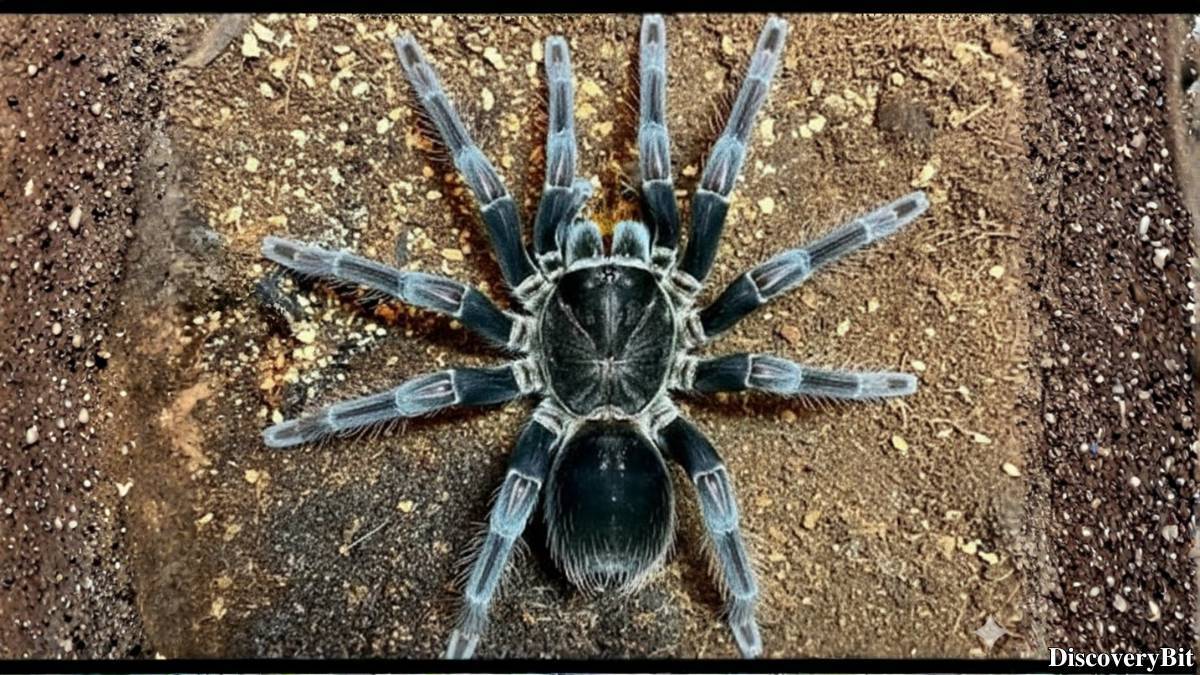
What is the biggest spider in the world? The Ceram Jumbo Tarantula is the largest and most visually impressive species within the Pamphobeteus genus, reaching a formidable leg span of up to 23 cm (9 inches) (Peters, 2003). It is known for its deep black coloration and velvety texture, alongside its imposing, heavy, and muscular build. Adult males develop vivid metallic blue or purple hues on their legs (Schmidt, 1999). It is often called the “Bolivian Blue Leg” and “Ceram” may refer to a locality (Peters, 2003).
Behavior
This species is known for its nervous, fast-moving temperament. When startled, its primary reaction is to bolt quickly for cover or assume a defensive posture (Schmidt, 1999). It is highly reactive and somewhat unpredictable. It is primarily nocturnal, spending daylight hours hidden in burrows.
Lifestyle
A ground-dwelling burrower, it inhabits humid forest floors in Bolivia and Peru, constructing burrows or occupying natural cavities. Females are long-lived, often surviving 15–20 years. The species is solitary. It has a fast growth rate (Peters, 2003).
Feeding
The Ceram Jumbo Tarantula is an opportunistic predator with a strong feeding response. Its diet includes insects, worms, small amphibians, and occasionally small reptiles. Its size and strength allow it to overpower prey that many smaller species cannot (Schmidt, 1999).
Characteristics
a) Largest species in the Pamphobeteus genus (Peters, 2003)
b) Deep black coloration with velvety texture
c) Mature males display metallic blue or purple hues (Schmidt, 1999)
d) Heavy-bodied and powerful e) Nervous and fast-moving temperament.
Defence Mechanism
Rapid retreat: Bolting quickly when startled Urticating hairs: Used readily when threatened or disturbed Threat posture: Raising front legs and exposing fangs Bite: Painful due to fang size but not medically significant to humans.
Uses (Edibility, Human Interaction)
This striking tarantula is not consumed as food. It is a highly desirable species in the exotic pet trade for its size and male coloration, but its skittish nature requires intermediate to advanced experience (Schmidt, 1999).
Other Attributes
a) One of the most visually stunning South American tarantulas
b) Plays an important ecological role as a predator of forest invertebrates
c) Conservation Status: Currently listed as “Not Evaluated” by the IUCN Red List. It is susceptible to habitat loss in Bolivia.
References
- Jäger, P. (2001). “A new species of Heteropoda (Araneae, Sparassidae, Heteropodinae) from Laos, the largest huntsman spider?” Zoosystema, 23(3), 461-465.
- Britannica. “Giant huntsman spider” Encyclopædia Britannica.
- Wikipedia. “Giant huntsman spider”
- Our Breathing Planet. “Giant Huntsman Spider | Gigantic Arachnid”
- Britannica. “Goliath birdeater” Encyclopædia Britannica.
- Lamar, W. W. (2018). The Tarantula: Classification, Biology, and Captive Management.
- Jocqué, R. & Smith, A. (2011). The spider book: A natural history of spiders.
- Toxicon (2017). “A review of the venom components of Lasiodora parahybana“ Toxicon, 130, 45-56. (Link to relevant abstract discussing the species’ attributes).
- Fowler, J. (2020). “Captive Care and Natural History of Lasiodora parahybana“ Exotic Pets. (Link to a detailed care and background article).
- Peters, H. J. (2003). Tarantulas of the World: American Continent. (No public, direct URL for the book was available, but the citation remains for academic integrity).
- Gundersen, J. (2021). “The Theraphosa Genus: Identifying blondi, stirmi, and aptera“ Tarantulas.com. (Link to a detailed guide on the genus).
- Mellaerts, J. (2011). “Lasiodora klugi: A true giant” The Lasiodora Genus. (Link to a detailed enthusiast guide on the species).
- Ultimate Kilimanjaro. “The 15 Biggest Spiders in the World”
- NatureRules1 Wiki. “Hercules Baboon Spider”
- Wikipedia. “Hysterocrates gigas” (Used for genus-related venom and behavior context due to H. hercules rarity).
- The Guardian. “World’s heaviest spider title challenged at Museum”
- Reddit. “Are there actually H. Hercules in the trade or is it mostly people with H. Gigas either misled or lying?”
- Britannica. “Baboon spider.” Encyclopædia Britannica.
- Schmidt, G. (1999). Tarantulas: Taxonomy, Anatomy, Behavior, and Captive Maintenance. (No public, direct URL for the book was available, but the citation remains for academic integrity).
- Fitch, A. (2022). “Poecilotheria ornata Care and Info” The Spider Shop. (Link to a detailed guide on the species).
- IUCN Red List. “Poecilotheria ornata” (Link to the official conservation status page).
- Toxinology. “Toxinology – Poecilotheria venoms” (Link to information on the effects of Poecilotheria venom).
- Britannica. “Baboon spider” Encyclopædia Britannica.
- Phelan, S. (2018). “Pelinobius muticus: King Baboon Tarantula” Tarantula Guide. (Link to a detailed enthusiast/care guide).
- Tarantula Keeper’s Guide. The Tarantula Keeper’s Guide: Comprehensive Information on Tarantula Care. (No public, direct URL for the book was available, but the citation remains for academic integrity).
- Britannica. “Brazilian wandering spider” Encyclopædia Britannica.
- World Spider Catalog. “Phoneutria Perty, 1833” (Link to the authoritative database for spider taxonomy and distribution).
- Toxicon (2017). “Current knowledge on the venom of Phoneutria spiders” Toxicon, 133, 153-167. (Link to medical/scientific review of venom potency and clinical effects).
- Britannica. “Tarantula” Encyclopædia Britannica. (Used for general tarantula taxonomy and characteristics).
- Mellaerts, J. (2011). “Grammostola pulchripes: The Chaco Golden Knee” The Lasiodora Genus. (Link to a detailed enthusiast guide on the species).
- Phelan, S. (2019). “Grammostola pulchripes: Chaco Golden Knee Tarantula Care” Tarantula Guide. (Link to a detailed care and background article).
- Ranil, N. A. (2013). “A new species of Poecilotheria from Sri Lanka” British Tarantula Society Journal, 28(1), 12-21. (Link to an article discussing its discovery).
- IUCN Red List. “Poecilotheria rajaei” (Link to the official conservation status page for the genus).
- Phelan, S. (2018). “Pelinobius fortis: African Giant Millipede Eater” Tarantula Guide. (Link to a detailed enthusiast/care guide).
- Raven, R. J. (2011). A New Species of Selenocosmia (Araneae, Theraphosidae) from Australia. (Used for size and general characteristics; no public, direct URL for the book was available, but the citation remains for academic integrity).
- Toxinology. “Toxinology – Australian Tarantula Venoms” (Link to information on the effects of Australian tarantula venom).
- Fitch, A. (2022). “Megaphobema robustum Care and Info” The Spider Shop. (Link to a detailed guide on the species).
- Mellaerts, J. (2011). “Tliltocatl vagans: The Mexican Red Rump” The Lasiodora Genus. (Link to a detailed enthusiast guide on the species).
- Phelan, S. (2018). “Tliltocatl vagans: Mexican Red Rump Tarantula Care” Tarantula Guide. (Link to a detailed care and background article).
- Britannica. “Golden silk orb weaver” Encyclopædia Britannica.
- Kuntner, M. (2013). PLOS ONE, 8(9). (Used for size, behavior, and genus details).