@carloasg380467

Carlo Godinez posted an update in the group
 Discovery 3 months, 2 weeks ago
A ~10cm Titanosaur Tail Vertebra Found In 1985 On James Ross Island, Antarctica ~40 Years Ago Has Been Identified As Antarctica’s First Dinosaur Bone. It Dates To ~82 Mya, When The Continent Had Lush Forests. Titanosaurs Were The Group That Included Earth’s Largest Dinosaurs, And This Plant-Eater Was ~7m Long, Likely A Juvenile Or Small Adult.
Carlo Godinez posted an update in the group
Animal 7 months, 1 week agoU.S Researchers Analyzed The Largest T. Rex Dataset, 17 Leg Bones, To Study Growth Rings, Revealing Hidden Annual Patterns. The Findings Show T. Rex Reached Full Adult Size (~8 Tons) Around Age 35–40, Not 20–25 As Previously Thought. They Matured Gradually Over Decades With Prolonged Adolescence, Implying Lifespans Well Beyond 40 Years.

…
Carlo Godinez posted an update in the group
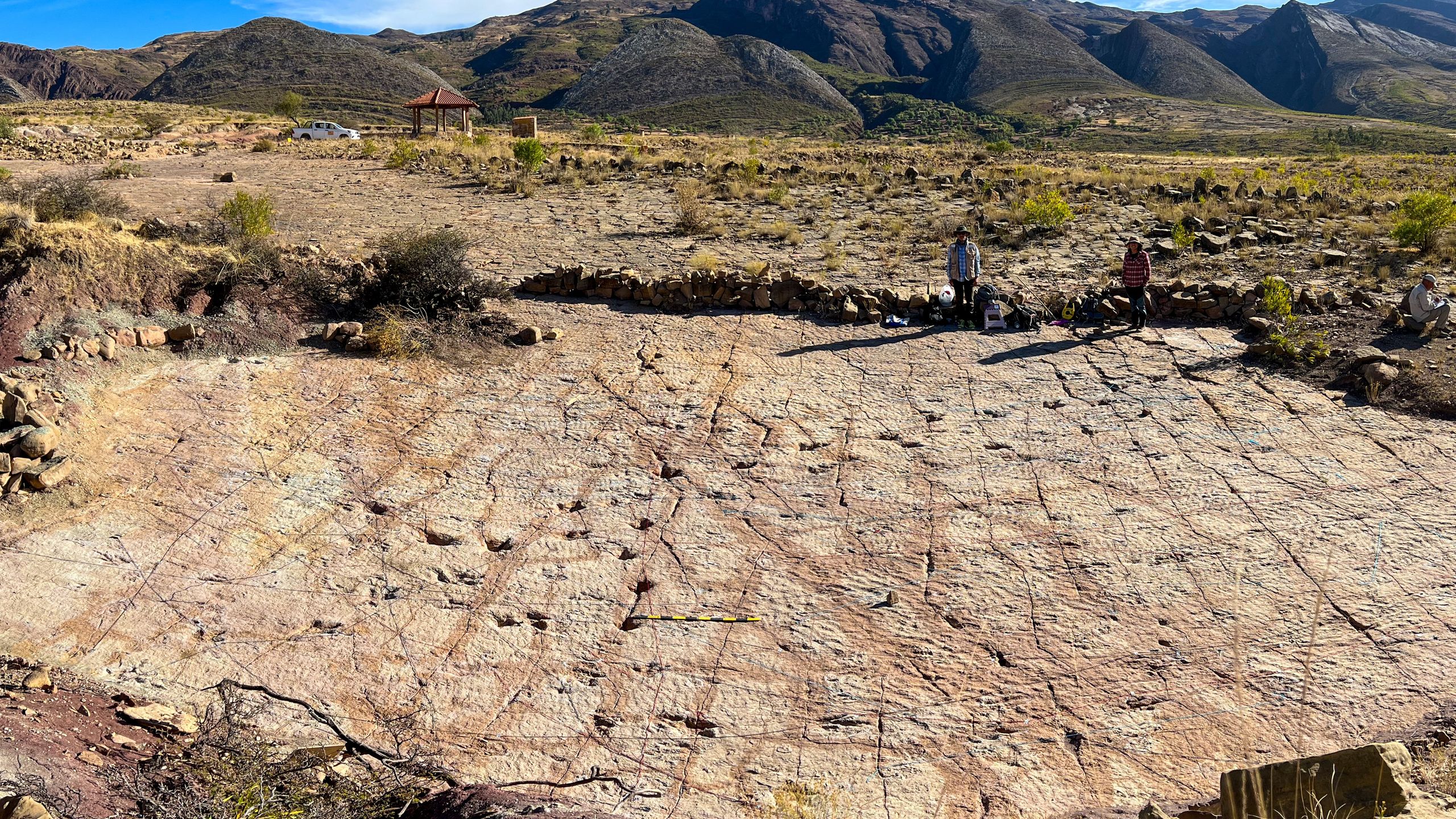
Discovery 10 months, 3 weeks agoCarreras Pampa, Bolivia, Is Now The World’s Largest Dino Tracksite, With 16,600 Theropod Prints & 1,378 Swim Tracks. The Upper Cretaceous Site, Surpassing Cal Orck’o, Also Holds Records For Continuous Trackways & Tail Traces. Tracks Show Varied Behaviors (Walking, Swimming, Group Travel) On A Flat Surface, Unlike Cal Orck’o’s Vertical Wall.
… Carlo Godinez posted an update in the group
Animal 1 year, 1 month agoPaleontologists Found Zavacephale Rinpoche, The Oldest And Most Complete Dome-Headed Dinosaur (DHD), In Mongolia’s Gobi Desert, Jutting From A Cliff. At 108–115M Years Old, It’s 15M Years Older Than Prior DHDs. The Juvenile, 3.3ft Long & 12.9lbs, With A Full Skull & Limbs, Offer Rare Insight Into Pachycephalosaur (DHD) Growth & Evolution.
…
Carlo Godinez posted an update in the group
Discovery 1 year, 5 months agoChinese Scientists Discovered A New Bacterium Strain, Niallia Tiangongensis, Aboard The Tiangong Space Station. It Adapts To Extreme Space Conditions, Combats Oxidative Stress, & May Turn Waste Into Resources. Studying Such Microbes Could Enhance Astronaut Health, Spacecraft Safety, & Innovations In Medicine, Agriculture, & Sustainability.
… Carlo Godinez posted an update in the group
Animal 1 year, 7 months agoThe Newly Discovered Duonychus Tsogtbaatari, Found In Mongolia’s Gobi Desert, Has The Largest Dinosaur Claw Preserved With Keratin Sheaths. This 10-ft, 573-lb Therizinosaur, A Plant-Eater In The Theropod Family (T. Rex Included), Used Sharp 2-Fingered Claws For Grasping, Defense, Or Display. Feathered, It Resembled Sloth And Giraffe Mix.
…
Carlo Godinez posted an update in the group
Discovery 4 years, 8 months agoResearchers Have Discovered The World’s Largest, ~2cm Long, Bacterium In The Caribbean Mangroves. The Bacterium, Said To Have Pushed The Limit Of How Big And Sophisticated Microbes Can Become, Is Also Said Could Be The Missing Link In The Evolution Of Complex Cells. Researchers Are Proposing To Call The Bacterium Thiomargarita Magnifica.
…
Carlo Godinez posted an update in the group
Discovery 6 years agoCancer Researchers, In The Netherlands, May Have Discovered A New Organ In The Nook, Where The Nasal Cavity Meets The Throat. The Organ, A Pair Of Large Salivary Glands, If Confirmed, Will Be The First Organ Discovered In Over 300 Years. Any Modern Anatomy Book Will Point To 3 Major Salivary Glands, But This New Organ May Make It The Fourth. Cool!
Carlo Godinez posted an update in the group
Discovery 6 years, 7 months agoScientists May Have Found A Material, In A Dinosaur Fossil, Which They Claim Looks Like The DNA Of A 74 Million To 80 Million Years Old Dinosaur, Hypacrosaurus, From North America. However, Skeptics May Not Believe It’s Dinousar’s DNA As DNA Cannot Survive For That Long. But If It Is Dinosaur DNA, Then Scientists May Clone Dinosaurs.
… Carlo Godinez posted an update in the group
Discovery 6 years, 7 months agoResearchers, Based On Oxygen-18 And Oxygen-16 Isotopes Archived In ~3.2-Billion-Year-Old Piece Of Oceanic Crust Found In The Panorama District Of The Pilbara Craton, Western Australian, Are Stating That Earth May Have Been Covered In Water, Around 3 Billion Years Ago, Without Any Continents Separating The Oceans.
Recent posts
- The 52 Fastest Animals in the World: Nature’s Ultimate Speed Guide January 8, 2026
- Ultimate Guide To Rainbow Colors: Order, Science, History, And More December 22, 2025
- Noise Vs. Stealth: The World’s 10 Loudest Submarines, Featuring Type 094 Submarine Operations in China December 16, 2025
- Top 17 World’s Biggest Spiders: Giants Of The Arachnid Kingdom December 11, 2025
- Murder, Pride, And Zeal: The Ultimate Guide To Group Names Of Animals December 5, 2025
Log in with your credentials
Forgot your details?
Create Account